Showing posts with label Asia News. Show all posts

Saturday, 5 August 2017

UN Security Council to vote Saturday on N. Korea sanctions

UNITED NATIONS: The UN Security Council will vote Saturday on a US-drafted resolution toughening sanctions on North Korea, diplomats said Friday. 

The vote is scheduled for 3 pm (1900 GMT) on the new measures that could deprive North Korea of $1 billion in annual revenue from exports of coal, iron, lead and seafood. 

Friday, 4 August 2017

China holds drill to shut down

A woman making purchases through her smartphone at a shop in Beijing on 23 July 2017
China has carried out an internet drill in order to closing down websites that are consider to be harmful.
State run media said Thursday's exercise was aimed also to force internet data centres to hand over contact details of website owners.
China already operates a strict internet censorship regime.
Analysts say it appears to be tightening controls ahead of an important political meeting later this year.
Beijing also recently began cracking down on VPNs (virtual private networks) which allow internet users to circumvent censorship and surveillance.
Thursday's exercise involved officers from the internet surveillance department at the public security ministry contacting internet data centres and asking them to target websites that host content deemed harmful, state media said.

Thursday, 11 May 2017

Germany not 'first in line' to boost Afghanistan troops


German Chancellor Angela Merkel has said that she does not believe Germany is "first in line" to send more troops to Afghanistan, as NATO considers a proposal to boost forces there. 
"I don't think we're first in line to expand our capacities there," Merkel said after meeting with NATO Secretary-General Jens Stoltenberg on Thursday. 
She said Germany will continue to lead NATO's military training mission in northern Afghanistan, adding that she will wait and see the outcome of the alliance's assessment of a request from military chiefs to send more troops to the country. 
"The news conference between Stoltenberg and Merkel was very heavy on warm words, on the appreciation of the role of NATO and the role of Germany, but it was light on specifics regarding whether the Germans would perhaps increase their contingent of troops in Afghanistan," Kane said. 
On Wednesday, Stoltenberg met British Prime Minister Theresa May, a day after reports suggested NATO had asked Britain for more troops a few weeks ago.
He confirmed he had received a request for more troops, but insisted it would not mean a return to combat operations.
"We have received a request from our military authorities to increase our military presence in Afghanistan with a few thousand troops," Stoltenberg said.
"It will continue to be a train, assist and advise operation," he added.
Stoltenberg said a decision on the request will be made within weeks and the issue is expected to be high on the agenda at the NATO annual summit in Brussels on May 25.

'Desperate' for assistance

The US has an additional 1,500 soldiers conducting assist missions directly under Pentagon command.
They have sustained high casualties, up 35 percent in 2016 with 6,800 soldiers and police killed, according to a US watchdog.
In April, the Taliban announced the beginning of its annual "spring offensive" and last week the armed group stormed and seized a district in the vicinity of Kunduz, in northern Afghanistan.
Al Jazeera's John Hendren, reporting from Kabul, said the Afghan government is in "desperate" need of assistance.
"If you talk to Afghan troops, they say they desperately need the help," Hendren said. "In the north and south of the country, they are embattled."
He added that the goal of the idea of a troop increase is to get the Taliban to the negotiating table.

The annual 'Plum Rains' in east Asia

Residents float barrels and belongings through the flooded streets in south China's Gaungzhou province [AFP]
Every year the people of east Asia await the arrival of the seasonal rains with a mix of anticipation and trepidation.
These spring rains generally arrive in eastern China, Taiwan and Okinawa during the month of May as the moist air over the Pacific meets the cooler continental air mass coming down from the interior. The formation of frontal depressions along the front bring rain across the region, moving back and forth depending on the strength of the cool and warm air masses.
Over the next few months, the rains along this almost stationary front migrate to parts of Russia, Japan, the Korean Peninsula, and – in the later summer months – to eastern China. The front is known as the Meiyu-Baiu, or the "Plum Rains" as it is known locally.
As the front moves back and forth, there is often very heavy and prolonged rainfall which often leads to flooding, particularly in eastern China, and the heavy rains can frequently lead to mudslides in more rural areas. This year has proved no exception, with the recent heavy rains already causing widespread flooding across parts of Zengcheng District in Guangzhou Province in the south.
However, in the years when the Meiyu-Baiu does not produce the heavy downpours, this can often lead to drought, which has a far more long-term, negative impact on the region and infrastructure. 

NATO chief, Merkel to discuss Afghan troop increase

NATO already has about 13,450 troops in Afghanistan, including 6,900 US and 500 British personnel [File: Reuters]
A proposal to boost NATO forces in Afghanistan will be on the agenda of a meeting between the alliance Secretary-General Jens Stoltenberg and German Chancellor Angela Merkel on Thursday.
The meeting comes on the heels of a request from military chiefs for more troops to be sent to Afghanistan.
On Wednesday, Stoltenberg met British Prime Minister Theresa May, a day after reports suggested NATO had asked Britain for more troops a few weeks ago.
He confirmed he had received a request for more troops, but insisted it would not mean a return to combat operations.
"We have received a request from our military authorities to increase our military presence in Afghanistan with a few thousand troops," Stoltenberg said.
"It will continue to be a train, assist and advise operation," he added.
Stoltenberg said a decision on the request will be made within weeks and the issue is expected to be high on the agenda at the NATO annual summit in Brussels on May 25.
Al Jazeera's Dominic Kane, reporting from Berlin, said Merkel is likely to say Germany supports the role of foreign troops in Afghanistan, but "the question will be whether her government will commit more troops."

'Desperate' for assistance

Since NATO's combat mission in Afghanistan formally ended in 2014, Taliban attacks have intensified and Afghan military and civilian casualties have risen. 
NATO already has some 13,450 troops in Afghanistan, including around 6,900 US and 500 British military personnel, who are training the Afghan armed forces to eventually take over the country's defence and security.
The US has an additional 1,500 soldiers conducting assist missions directly under Pentagon command.
They have faced high casualties, up 35 percent in 2016 with 6,800 soldiers and police killed, according to a US watchdog.
In April, the Taliban announced the beginning of its annual "spring offensive" and last week the armed group stormed and seized a district in the vicinity of Kunduz, in northern Afghanistan.
Al Jazeera's John Hendren, reporting from Kabul, said the Afghan government is in "desperate" need of assistance.
"If you talk to Afghan troops, they say they desperately need the help," Hendren said. "In the north and south of the country, they are embattled."
He added that the goal of the idea of a troops increase is to get the Taliban to the negotiating table.
Separately, the US administration is reportedly considering deploying more troops to Afghanistan as well. Official sources quoted anonymously by US media said the increase would range from between 3,000 to 5,000 soldiers, including Special Operations forces.
President Donald Trump is expected to receive a proposed new approach to the war this week, according to Theresa Whelan, a Pentagon policy official.
According to the United Nations, 583,000 people have fled their homes as a result of the conflict in 2016, the highest number of displacements since records began in 2008.

Blogger sentenced for playing Pokemon Go in church

A blogger has been given a suspended jail sentence by a court in Russia after he posted a video of him playing the Pokemon Go video game inside a church last year.
Ruslan Sokolovsky was found guilty of inciting religious hatred inside a Russian Orthodox church after he posted the video on YouTube which has attracted more than 1.9 million views.
On Thursday, the court also sentenced the 22-year-old to 160 hours of compulsory community service and told him not to appear in public places. 
Russian prosecutors had earlier called for a three-and-a-half year jail sentence for the blogger in a case that has drawn ire from rights activists.
Sokolovsky - dubbed a prisoner of conscience by Amnesty International - was detained and charged under controversial legislation for "inciting hatred" and "insulting the feelings of religious believers" before being put on trial.
"There are no grounds to let the defendant go unpunished," Russian news agencies had quoted a prosecutor as saying in court.
Pokemon Go, jointly developed by Nintendo Co and Niantic Inc, generated masses of followers around the world as players use their phones to capture animated characters that appear in real locations.
Sokolovsky's treatment has drawn comparisons with the jailing of the Pussy Riot performance artists after they staged a punk performance in a Moscow cathedral in 2012.
The case has once again highlighted the power of the Russian Orthodox Church under the conservative rule of President Vladimir Putin. 
South Korean Pokemon Go fans go the distance to play game

Wednesday, 10 May 2017

CIA creates 'Mission Center' on North Korea threat


The US Central Intelligence Agency (CIA) has announced the establishment of a Korea Mission Center dedicated to dealing with North Korea.

The mission centre will use all of the resources of the CIA and other US intelligence agencies to address ballistic and nuclear missile threats posed by North Korea, the CIA said on Wednesday.
"Creating the Korea Mission Center allows us to more purposefully integrate and direct CIA efforts against the serious threats to the United States and its allies emanating from North Korea,” CIA Director Mike Pompeo said in a statement.
The Korea Mission Center is the CIA’s 11th mission centre. The centres operate as a stand-alone, issue-focused entities that utilise and integrate all CIA elements and resources.
Other centres include Mission Center for Africa, Mission Center for Counterintelligence, Mission Center for Counterterrorism and Mission Center for Near East.
Creating a mission centre focused on one country, as opposed to an entire region or continent, indicates that the administration of President Donald Trump is taking a more forceful approach against North Korea.
"Just as the threats facing our nation are dynamic, so too must the CIA continue to evolve to address them," CIA spokesperson Heather Fritz Horniak said. 
North Korea has conducted a series of ballistic missile tests in recent weeks, prompting sharp rebuke from the Trump administration. 
Trump warned of "major conflict" with North Korea after the tests.
But a former CIA official downplayed the importance of establishing a mission centre dedicated to North Korea, calling the move "cosmetic".
Former CIA case officer Bob Baer told Al Jazeera that the CIA does not know what to do with nuclear-armed North Korea.
He said the CIA does not appear to want to, for example, jam North Korean communications or drop weapons on it. Short of that, this move is just "huffing and puffing", Baer added.
He stressed that North Korea could never achieve parity with the US so it uses its nuclear weapons card as blackmail to get concessions or to force the US into negotiations.
Baer suggested that the US should leverage China's influence with North Korea and let it rein its nuclear armed neighbour.

Wall collapse kills guests at Bharatpur wedding

At least 22 people were killed at a wedding party in western India after a wall collapsed on the guests, police said.
The guests had taken shelter from a storm under a tin shack that adjoined the wall when it collapsed late on Wednesday, local police officer Anil Tank told AFP news agency.
"The wall and a tin shed attached to it at the marriage venue collapsed due to a storm," said Tank, superintendent of police in Bharatpur, the district of Rajasthan state where the incident occurred.
The death toll included at least four children. Another 28 people were injured and have been taken to hospital, Tank added.
"The injured were rushed to nearby hospitals immediately and treatment was administered. One injured has been referred for SMS Hospital in Jaipur," said Tank.
The incident took place nearly 200km south of the capital Delhi.
 
"We worked through the night," a rescue worker told India TV.
"We tried to rescue as many people as possible, the scene was horrific," the rescuer added.
Rajasthan is one of India's most arid states, but suffers frequent dust storms during the hotter months.
A heatwave has swept across many parts of India in recent weeks, with temperatures reaching 44C in Delhi.
Building collapses are common in India, where high demand for housing and lax regulations have encouraged some builders to cut corners, use substandard materials or add unauthorised extra floors.
In 2013, a building being constructed illegally in Mumbai caved in, killing 74 people in the country's worst building collapse in decades. 
Source: News agencies

Deadly earthquake hits China's Taxkorgan county

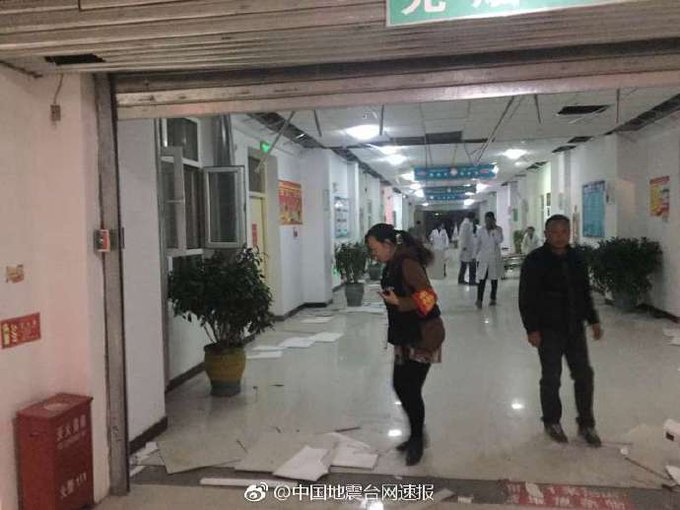
At least eight people were killed and more than 20 injured after a 5.5-magnitude earthquake struck Taxkorgan county in western China, the region's earthquake administration said.
The quake struck a remote mountainous area in China's Xinjiang region that borders Tajikistan, Afghanistan and Pakistan on Thursday morning.
The Xinjiang Earthquake Administration said 23 people had been injured, including one seriously, and more than 180 houses had collapsed in the lightly populated area.
Most homes in the area are made of wood and mudbricks or rock, it said. Search and rescue work was under way, it added.
The US Geological Survey said the quake struck at a depth of 10km.
The People's Daily posted a photo on Twitter of a building in ruins.
Other photos, all from the official earthquake monitoring centre, show ceiling panels on the ground in one building and products on the ground in a store.
Taxkorgan county has a population of around 33,000, and is notable for being a stop on the Karakoram Highway, built along the ancient Silk Road connecting China's far western city of Kashgar to the Pakistani capital of Islamabad.
The official Xinhua News Agency said there had been frequent aftershocks.
Earthquakes are common in China's west, although the low population density there often means casualty figures are low.
However, in 2003, a 6.8-magnitude quake in a nearby county to Thursday's quake killed 268 people.
China's deadliest earthquake this century, a 7.9 magnitude temblor with a depth of 19km, struck Sichuan province in May 2008, killing nearly 90,000 people.

S. Korea's Moon begins term as president after landslide election win confirmed

Subscribe to our videos for free!

Hours after celebrating his election win, new South Korean President Moon Jae-in on Wednesday was thrown into the job of navigating a nation split over its future and faced with growing threats from the North and an uneasy alliance with the US.

Moon, whose victory capped one of the most turbulent political stretches in the nation's recent history and set up its first liberal rule in a decade, began his duties as president after the National Election Commission officially declared him as winner after a morning meeting.
The election body had finished counting votes as of 6 a.m. and said Moon gathered 41 percent of the votes, comfortably edging conservative Hong Joon-pyo and centrist Ahn Cheol-soo, who gathered 24 percent and 21 percent of the votes, respectively.
"The National Election Commission, based on the first clause of Article 187 of the Public Official Election Law, determines that the Democratic Party's Moon Jae-in, who gathered the largest number of valid votes, was elected as president," NEC Chairman Kim Yong-deok said in the televised meeting.
Shortly after the NEC declared him as winner, Moon, as the new commander in chief of the country's military, received a call from Army Gen. Lee Sun-jin, chairman of South Korea's Joint Chiefs of Staff, who briefed him on the military's preparedness against North Korea, a Democratic Party official said.
Moon also during the morning was expected to visit the National Cemetery in the central city of Daejeon, where the country's independence fighters and war heroes are buried, before returning to capital Seoul around noon to take an oath of office at the National Assembly.
There were also expectations that Moon would announce his nominee for prime minister, the country's No. 2 job that requires approval from lawmakers, and name his presidential chief of staff during the day.
South Korea might see a sharp departure from recent policy under Moon, who favors closer ties with North Korea, saying hard-line conservative governments did nothing to prevent the North's development of nuclear-armed missiles and only reduced South Korea's voice in international efforts to counter North Korea.
This softer approach might put him at odds with South Korea's biggest ally, the United States. The Trump administration has swung between threats and praise for North Korea's leader.
Moon, the child of refugees who fled North Korea during the Korean War, will lead a nation shaken by a scandal that felled his conservative predecessor, Park Geun-hye, who sits in a jail cell awaiting a corruption trial later this month.
Moon's presidency foregoes the usual two-month transition because Tuesday's vote was a by-election to choose a successor to Park, whose term was to end in February 2018. While this means Moon would have to initially depend on Park's Cabinet ministers and aides, the expectations were that he would move quickly to replace them with people of his own.
Moon will still serve out the typical single five-year term.
After exit polls indicated to his victory Tuesday night, Moon smiled and waved his hands above his head as supporters chanted his name at Gwanghwamun square in central Seoul, where millions of Koreans had gathered for months starting late last year in peaceful protests that eventually toppled Park.
"It's a great victory by a great people," Moon told the crowd. "I'll gather all of my energy to build a new nation."
Over the last six months, millions gathered in protest after corruption allegations surfaced against Park, who was then impeached by parliament, formally removed from office by a court and arrested and indicted by prosecutors.
Moon was chief of staff for the last liberal president, the late Roh Moo-hyun, who sought closer ties with North Korea by setting up large-scale aid shipments to the North and by working on now-stalled joint economic projects.
Hong, the conservative, is an outspoken former provincial governor who pitched himself as a "strongman," described the election as a war between ideologies and questioned Moon's patriotism.
Park's trial later this month on bribery, extortion and other corruption charges could send her to jail for life if she is convicted. Dozens of high-profile figures, including Park's longtime confidante, Choi Soon-sil, and Samsung's de facto leader, Lee Jae-yong, have been indicted along with Park.
Moon frequently appeared at anti-Park rallies and the corruption scandal boosted his push to re-establish liberal rule. He called for reforms to reduce social inequalities, excessive presidential power and corrupt ties between politicians and business leaders. Many of those legacies dated to the dictatorship of Park's father, Park Chung-hee, whose 18-year rule was marked by both rapid economic rise and severe civil rights abuse.
As a former pro-democracy student activist, Moon was jailed for months in the 1970s while protesting against the senior Park.
Many analysts say Moon likely won't pursue drastic rapprochement policies because North Korea's nuclear program has progressed significantly since he was in the Roh government a decade ago.
A big challenge will be U.S. President Donald Trump, who has proven himself unconventional in his approach to North Korea, swinging between intense pressure and threats and offers to talk.
"South Koreans are more concerned that Trump, rather than North Korean leader Kim Jong Un, will make a rash military move, because of his outrageous tweets, threats of force and unpredictability," Duyeon Kim, a visiting fellow at the Korean Peninsula Future Forum in Seoul, wrote recently in Foreign Affairs magazine.
"It is crucial that Trump and the next South Korean president strike up instant, positive chemistry in their first meeting to help work through any bilateral differences and together deal with the North Korean challenge," she said.

Will the sun shine on Moon's South Korea?

t is the return of liberalism in South Korea. The election of President Moon Jae-inmarks a major shift in the country's political landscape.
Conservatives have been in charge for nearly a decade.
But after the last six months, which ended with the previous president impeached and facing jail, it is not surprising that South Koreans want change.
The question is - what will change look like?
Moon's policies could lead to dialogue with North Korea, a long-time adversary, and could harm relations with the US, a long-time ally
Is he up to the challenges?
Presenter: Adrian Finighan
Guests:
Robert Kelly, professor of political science and diplomacy at Pusan national university
Hwang Joung-Wook, law professor at Hankuk University of Foreign Affairs
Einar Tangen, political affairs analyst and specialist on China.