Showing posts with label POlitical News. Show all posts

Saturday, 5 August 2017

As Kenya elections draw near, country reveals an electorate divided by tribe

Residents of Mathare, a slum in Nairobi, prepare for Tuesday's presidential election. 
A concrete bridge and a narrow, garbage-filled river divide the slum of Mathare into two parts, a space between ethnic groups and voting blocs that are competing fiercely — and many say dangerously — over Kenya’s presidential elections scheduled for Tuesday.
Here in one of the most economically successful and stable countries in East Africa, Mathare is only a few miles away from Nairobi’s rising skyline. Tech firms have popped up on the city’s periphery. Every week, thousands of tourists pile into sleek safari trucks. This spring, the top U.N. humanitarian official here, Siddharth Chatterjee, called Kenya, “a beacon of hope in a region mired in fragility.”
But with the election approaching, Mathare feels far from stable. On one side of the rutted bridge is a community of ethnic Kikuyus, the tribe of incumbent Uhuru Kenyatta, 55. On the other side are the Luos, the tribe of opposition candidate Raila Odinga, 72.

Most days, those tribes peacefully coexist, as the slum is consumed by honking minibuses and a frenzy of commercial activity, with traffic moving across the bridge in both directions. But as the election approaches, it is a line not to be crossed.

Thursday, 11 May 2017

How will UK elections affect Africa?

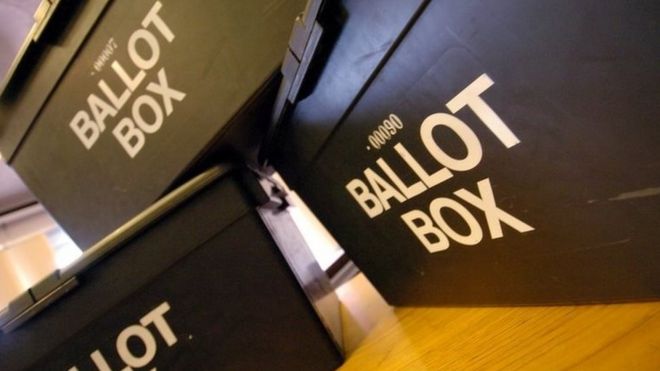
Ballot box generic
British voters go to the polls on 8 June but how will the vote affect Africa?
The election follows last year's Brexit vote when voters decided to leave the European Union, a decision that is expected to bring a lot of changes to the UK's international relationships.
If you want to know where the major parties stand on trade, immigration, education, or an issue which you want to know about or want a clarification, let us know.
We'll put a selection of your questions to our reporters and in-house experts for their analysis.
Whatever you want to ask about how the UK election will affect Africa, please use the box below.

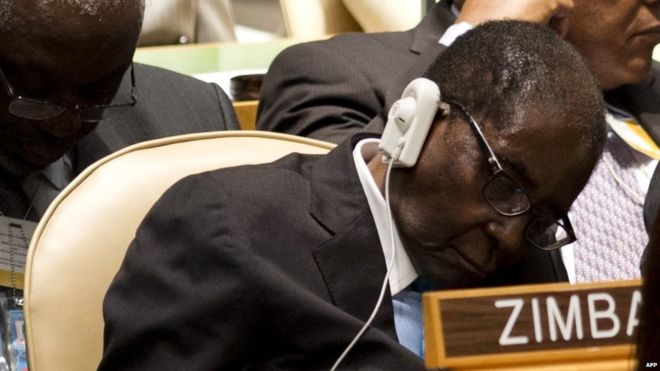
Zimbabwe's Robert Mugabe 'not asleep just resting his eyes'

President Mugabe slouches in chair with eyes closed at the UN General AssemblyImage copyrightAFP
Image captionRobert Mugabe's eyes are sensitive to bright lights, his spokesman said
Zimbabwe's President Robert Mugabe is not asleep when he closes his eyes for long periods during meetings but is resting his eyes, his spokesman says.
"The president cannot suffer bright lights," George Charamba was quoted as saying by the state-run Herald newspaper.
Mr Mugabe, 93, has been seen apparently sleeping at several events, leading to speculation about his fitness.
He intends to stand in presidential elections next year.
The president is currently receiving specialised medical treatment for his eyes in Singapore.
Mr Mugabe most recently appeared to fall asleep during a discussion panel about "fragile states" at a World Economic Forum meeting in South Africa earlier this month.
There he stated that Zimbabwe was 'one of the most developed countries in Africa'
"I feel like a failure when there is this reading that the president is sleeping in conferences - no," Mr Charamba said.
He then compared Mr Mugabe to the anti-apartheid icon Nelson Mandela, whose eyes were affected by years of working in a limestone quarry while imprisoned on Robben Island.
"You were not allowed to even use flashes whenever he was in the room," Mr Charamba said.

Comey's sacking will not be the end of President Trump

Protesters rally in opposition to President Donald Trump's firing of FBI Director James Comey at the White House in Washington, DC [Shayn thew/EPA]

by

Andrew Mitrovica is an award-winning investigative reporter and journalism instructor.
Too many so-called "progressives" still don't get it.
There they were on Twitter and in instant coffee-quick columns - joined by their titular intellectual leader, David Frum (yes, him) - mimicking Dylan Thomas' verses to rage against the dying of the light while Donald "Nero" Trump plays the proverbial fiddle as the Constitution and the lingering shreds of the rule of law turn to ashes.
This latest spasm of cable-TV-stoked hysteria was triggered by Trump's jarring decision late Tuesday afternoon to sack the ripe-for-the-sacking FBI director, James Comey.  
Donald Trump's loyal minions insisted that Comey had to go because the cocky G-man had suddenly and conveniently earned an F over his handling of Hillary Clinton's curious handling of her emails. On cue and in unison, "progressives" shouted "cover-up" and crowed that a constitutional "crisis" was afoot after Saint Comey got the boot.    
You'll recall - since they apparently forgot - that days earlier many of these same "progressives" were sticking their rhetorical knives gleefully into the hapless and now unemployed FBI director after his snide remark that he was rendered "mildly nauseous" by the suggestion that his late-day election intervention had tilted the tight presidential race in Trump's favour.    
If you're trying to keep score, among weathervane progressives Comey has gone from devil to saint to devil and back to saint over the past eight months. It's a dizziness-inducing career trajectory, isn't it?

Revisiting a willowy ghost

Still, in the wake of Comey's departure, progressives are also, once again, revisiting the willowy ghost of Richard Nixon and, drum roll, Watergate - the facile, all-purpose shorthand for a potentially combustible and politically fatal scandal.
The ultimate intent, I suspect, of resurrecting these familiar tropes in the context of Comey's abrupt dismissal is to suggest that Trump has committed an impeachable offence in order, ironically, to stave off impeachment.
This is a self-defeating delusion that has not only gripped progressives like a coiled snake but reveals how they remain blissfully wedded to their cockeyed faith in - for want of a better term - American "democracy".  
Here's the usually restrained CNN legal analyst, Jeffery Toobin, channeling his fellow progressives' angst in a fit of anguished hyperbole. "It is a grotesque abuse of power by the president of the United States", Toobin told the ever mesmerised-looking, Wolf Blitzer. "This is the kind of thing that goes on in non-democracies."

Wednesday, 10 May 2017

Russia’s top diplomat invited to White House

rump will meet Wednesday with Vladimir Putin’s top diplomat at the White House on Wednesday, the White House said, marking the highest level, face-to-face contact with Russia of the American leader’s young presidency.
The meeting would also signal that the two countries have improved ties that Trump recently described as being at an “all-time low.”
Trump’s talks with Russian Foreign Minister Sergey Lavrov will take place after the Russian’s meetings earlier in the day with Secretary of State Rex Tillerson.
A Russian plan to stabilize Syria after more than six years of civil war is the most urgent foreign policy topic on the agenda. But the meeting will be impossible to separate from the Trump administration’s unfolding political drama in Washington, where FBI and congressional investigations are looking into possible collusion between Trump campaign associates and the Kremlin related to last year’s presidential election. U.S. intelligence agencies accuse Moscow of meddling to help Trump’s chances of victory.
The sigma of the Russia probes has been impossible for Trump to shake. Trump on Tuesday abruptly fired FBI Director James Comey, dramatically ousting the nation’s top law enforcement official in the midst of the bureau’s investigation into Trump’s ties with Russia.
Less than a month into Trump’s presidency, he fired his national security adviser, Michael Flynn, saying Flynn misled senior administration officials about his pre-inauguration talks with Sergey Kislyak, Russia’s ambassador in Washington.
In a Senate hearing Monday, former acting Attorney General Sally Yates said she bluntly warned Trump’s White House in January that Flynn “essentially could be blackmailed” by the Russians because he apparently had lied to his bosses about his contacts with Kislyak.
Trump has said he has no ties to Russia and isn’t aware of any involvement by his aides in any Russian election interference. He calls the various investigations a “hoax” driven by Democrats still bitter that their candidate, Hillary Clinton, was defeated last year.
But in the meantime, his hopes for a possible rapprochement with Moscow, so regularly repeated during the campaign, have been derailed. Ties soured further in April after the U.S. blamed a Russian ally, Syrian President Bashar Assad, for a deadly chemical weapons attack on civilians and Trump fired some 60 cruise missiles at a Syrian air base in response.
After Tillerson visited Putin and Lavrov in Moscow on April 12, Trump said flatly, “Right now we’re not getting along with Russia at all.”
Still, Tillerson’s meeting provided a blueprint for how the former Cold War foes might go about improving ties.
A main focus is Syria, where both governments want to end a civil war that has killed up to 400,000 people, contributed to a global refugee crisis and allowed the Islamic State group to emerge as a global terror threat. The continued fighting between rebels and Assad’s military has complicated U.S. efforts to defeat IS.
Lavrov will be coming to the American capital with a Russian plan to end the violence, after hashing out an agreement with Iran and Turkey last week.
It focuses on the creation of four de-escalation zones. Critical details still need to be finalized and the U.S. response has been cautious, with top officials such as Defense Secretary Jim Mattis saying they’re still studying the concept and its various unanswered questions. The would-be safe zones would not cover areas where the U.S.-led coalition is fighting IS.
Despite the lack of clarity, the possibility of a meeting between Trump and Lavrov would in itself be a sign of some progress.
The Russian diplomat hasn’t visited Washington at all since 2013, a year before Russia’s annexation of Ukraine’s Crimea region and two years before it intervened militarily in Syria to help Assad remain in 

Will the sun shine on Moon's South Korea?

t is the return of liberalism in South Korea. The election of President Moon Jae-inmarks a major shift in the country's political landscape.
Conservatives have been in charge for nearly a decade.
But after the last six months, which ended with the previous president impeached and facing jail, it is not surprising that South Koreans want change.
The question is - what will change look like?
Moon's policies could lead to dialogue with North Korea, a long-time adversary, and could harm relations with the US, a long-time ally
Is he up to the challenges?
Presenter: Adrian Finighan
Guests:
Robert Kelly, professor of political science and diplomacy at Pusan national university
Hwang Joung-Wook, law professor at Hankuk University of Foreign Affairs
Einar Tangen, political affairs analyst and specialist on China.

Trump defends Comey dismissal amid calls for probe

Critics say Comey's dismissal was aimed at blunting an FBI probe into the Trump campaign's possible collusion with Russia during the 2016 election 
US President Donald Trump has defended his dismissal of FBI Director James Comey, fighting a storm of criticism that the ouster was aimed at blunting a probe into his presidential campaign's possible collusion with Russia to sway the 2016 election.
The White House on Tuesday said Comey was fired over his handling of an election-year FBI probe into then-Democratic presidential nominee Hillary Clinton's use of a private email server during her time as secretary of state.
Trump fires FBI Director James Comey
But Comey had also been leading an investigation into potential Russian collusion in last year's US presidential election.
Trump on Wednesday said Comey had lost the confidence of almost everyone in Washington and would be replaced by someone who "does a far better job".
His comments came as he welcomed Sergey Lavrov, Russia's foreign minister to the White House, in his first meeting with a Russian official since taking office in January 20.
Al Jazeera's James Bays, reporting from Washington, DC, said the timing of Comey's dismissal, in conjunction with Lavrov's visit, looked "extremely awkward" for the Trump administration.
"Here you have a president who has fired the head of the FBI, an agency that happened to be investigating associates of the president for possible collusion with the Russians over the hacking of the presidential election - and soon after that happens prominent Russians, including Lavrov and Russia's ambassador to the US, turn up in the Oval Office," Bays said.
Democrat Chuck Schumer called on the attorney general office to appoint a special prosecutor 
Comey's abrupt dismissal sent shockwaves across Washington and was swiftly condemned by Democrats - as well as some in Trump's own Republican Party.
Many Democrats, who had previously criticised Comey's management of the emails investigation, sharply questioned the timing of his dismissal, arguing that Trump could have acted soon after taking office on January 20.
Chuck Shumer, the Senate's minority leader, on Wednesday called for the appointment of a special prosecutor to investigate alleged links between Russia and the Trump campaign.
"If there was ever a time when circumstances warranted a special prosecutor, it is right now," Schumer said.
Al Jazeera's Kimberly Halkett, reporting from Capitol Hill, said Comey's dismissal had sparked fiery reactions, mostly along party lines.
"The cries going ever louder on Capitol Hill for an investigation, but the problem is that the special prosecutor needs to be appointed by the justice department, which is controlled by the White House," she said.
Reports also emerged on Wednesday that just days before his dismissal, Comey had asked for additional funding from the justice department to expand his investigation into possible Russian election meddling.

Brazil's Lula appears in court in corruption case

Luiz Inacio Lula da Silva, Brazil's former president, has appeared in court to testify over his alleged entanglement in a sprawling corruption scandal that has thrown the country's political class into tumult.
Lula, 71, is the highest-profile defendant in the "Operation Car Wash" probe into a multi-billion-dollar bribery scheme in which politicians and officials allegedly handed out public contracts in exchange for kickbacks.
Brazil corruption probe sends shivers across Latin America
He is accused of allowing corruption to flourish between 2003-2010 during his two terms as president and of personally benefiting from the schemes, including receiving a beach apartment in return for helping the OAS construction firm win government contracts.
The hearing in the southern city of Curitiba on Wednesday was closed to the public and media. 
The former president, whose supporters had gathered in Curitiba hours before his arrival at the courthouse, has repeatedly denied all charges.
A ruling by Judge Sergio Moro, who has spearheaded Brazil's biggest-ever corruption probe, is not expected until July.
Al Jazeera's Teresa Bo, reporting from Curitiba, said that Lula supporters were not allowed to come near the courthouse.
"There is a very strong presence of security forces because there were fears that clashes could happen between the Lula supporters - there are thousands of people here - and those who support Moro, who see the judge as a champion in the fight against corruption," she said.
Bo said that ahead of Lula's appearance at the court, his lawyers had tried to postpone the hearing.
"They said that they never had enough time to review the over-100,000 pages that are attached to this case. They also tried to get Judge Moro removed from this case, saying that he isn't impartial."

Leftist Mélenchon eyes Marseille ahead of parliament vote

Leftist firebrand Jean-Luc Mélenchon on Wednesday announced he would run as a French parliamentary candidate in Marseille, a city he doesn’t live in, but which heavily backed him in his unsuccessful bid for the presidency last month.

Mélenchon, who failed to qualify for the second round of the presidential race, but earned a sizeable 19.6 percent of votes in the first round, told supporters he intended to campaign for a parliamentary seat representing Marseille’s city centre.
“I intend to run in the [Bouches-du-Rhône department’s] fourth district, and I have already spoken to local activists there. But I need to wage this battle with the support of everyone, across the city,” the charismatic leader said in a letter addressed to members of his political movement.
The fourth district’s seat is currently held by Socialist Party MP Patrick Mennucci, but Mélenchon garnered 39 percent of ballots in that constituency in the April 23 first-round poll, more than any other presidential contender.
Mennucci, who is running for re-election in his home district, immediately slammed Mélenchon as a carpetbagger who was “reproducing” the worst of France’s “old political habits”.
“In only eight years, [Mélenchon] has been a senator from the Essone department, a European MP representing France’s southwest, a parliamentary candidate in the Nord department and now a candidate in the Bouches-du-Rhône. He is no longer a politician, but an election nomad,” Mennucci said on Facebook.
Messy divorce
Mélenchon’s decision to seek a parliamentary seat in France’s 577-seat National Assembly came after his coalition with France’s Communist Party (PCF) appeared to crumble on Tuesday evening.
La France Insoumise” (Unsubmissive France) movement led by Mélenchon and PCF leaders held several talks about extending their partnership through the two-stage legislative elections on June 11 and 18, but failed to reach a deal.
PCF chief Pierre Laurent said he regretted that La France Insoumise had unilaterally decided to step away from negotiations. Mélenchon quickly rejected the accusation as a lie.
Laurent blamed Mélenchon for breaking talks over a handful of constituencies where the PCF wished to field candidates, while the former presidential candidate accused the PCF of cutting backdoor deals with the Socialist Party and the Green Party during the negotiations.

Bahamas votes in closely-contested general election

Perry Christie is finishing his second non-consecutive term as prime minister [File: EPA]
Voters in the Bahamas headed to the polls on Wednesday, in a hotly-contested general election overshadowed by corruption allegations and rising unemployment. 
The election pits the party of Prime Minister Perry Christie, a veteran politician from the Progressive Liberal Party (PLP), against his main opponent, Hubert Minnis of the Free National Movement (FNM), a physician.
Polls opened at 8am (12:00 GMT), with more than 180,000 people registered to vote in 39 constituencies across the country. Voting was scheduled to finish at 6pm (20:00 GMT), with unofficial results expected around 10pm (00:00 GMT).
Voting was taking place calmly, but a polling station on the main island New Providence opened late following concerns about ballots, and some of those waiting left without voting.

Closely-watched election

Voters are casting ballots for 39 seats in the House of Assembly. The party with the majority of seats will form the government.
Minnis is campaigning on a platform of change, seeking to implement term limits on the prime minister and promote "Bahamian ownership in the economy," according to his website.
The election has been overshadowed by the long-delayed opening of a $4.2bn mega-resort called Baha Mar.
Critics of the 73-year-old Christie, who is finishing his second non-consecutive term as prime minister, say the time has come for him to retire.
Christie prompted condemnation earlier this year when he denied corruption accusations by raising his middle finger to reporters.
Education minister Jerome Fitzgerald is also embroiled in controversy over a shady multimillion-dollar business allegedly seeking contracts from Baha Mar resort, which is controlled by Chinese investors.
The island archipelago, which gained independence from Britain in 1973, heavily depends on tourism and foreign investment into resorts and other attractions.
International observers the Caribbean Community, the Commonwealth of Nations, the Organization of American States and the United States were invited to monitor the vote.